
Working wall
Also called: learning wall, working display
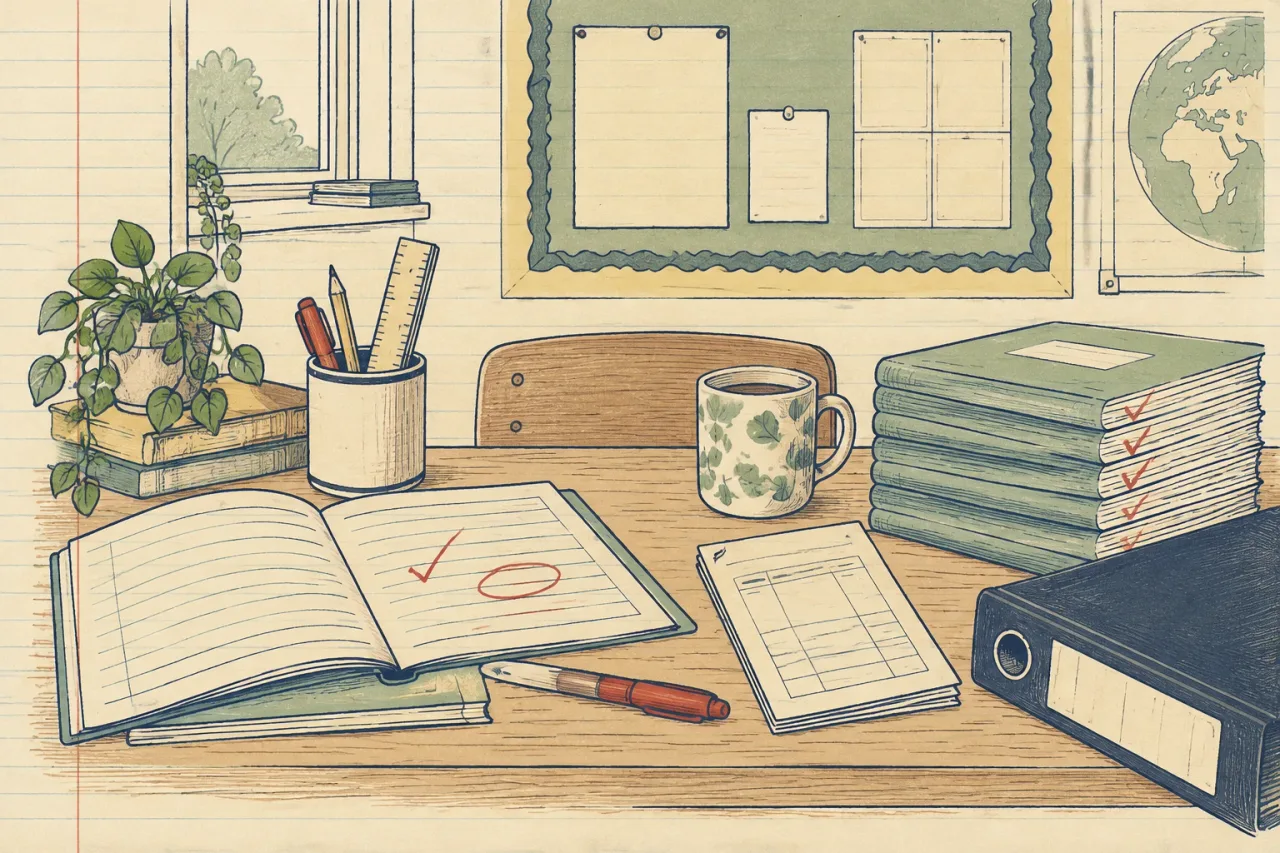
A working wall is a classroom display that changes as a unit goes on. It shows thinking in progress, not finished work, and pupils use it during lessons.
What it means in plain words
On day one a working wall is nearly empty. By the end of the unit it holds the key words, examples and steps pupils have met along the way.
The point is use. Pupils look at it when they are stuck, and you point to it when you teach. A display that stays the same for half a term is decoration. A working wall earns its space by changing.
What it looks like in daily life
- In a Year 4 maths unit on fractions, the wall starts with the unit title. Each lesson adds one worked example, a drawn diagram and the new vocabulary, such as numerator.
- In a Year 9 English unit on a novel, the wall holds a key quotation, a word bank and some sentence stems. After each lesson, pupils add a strong sentence from their own draft.
- In a Year 7 science unit, a question sits at the top. Pupils stick up predictions at the start, then move or correct them once the evidence is in.
What tends to help
Plan what goes up before the unit starts. If you know the six or so lessons ahead, you know what to add each time. Our guide to planning a six-lesson unit with AI in one evening shows one way to get that map done.
Add something every lesson, and ask pupils to help. Two minutes at the end is enough. Hang it at pupil eye level, in print big enough to read from their seats.
Choose items that help pupils do the task, such as a worked example or a sentence stem. This is a form of scaffolding, so take items down once pupils no longer need them.
If you use AI to make wall material, read every word before it goes up. A wrong example on the wall gets copied. Keep pupils’ names and personal data out of any AI tool unless your school has approved it.
The Planit Teachers Learning Wall Maker on Pro makes classroom displays as print-and-cut A4 packs. You can read more on the Planit Teachers report card. You still decide what goes up and when. A wall made by hand works well too.