
AI hallucination
Also called: confabulation, making things up, fabrication
What it means in plain words
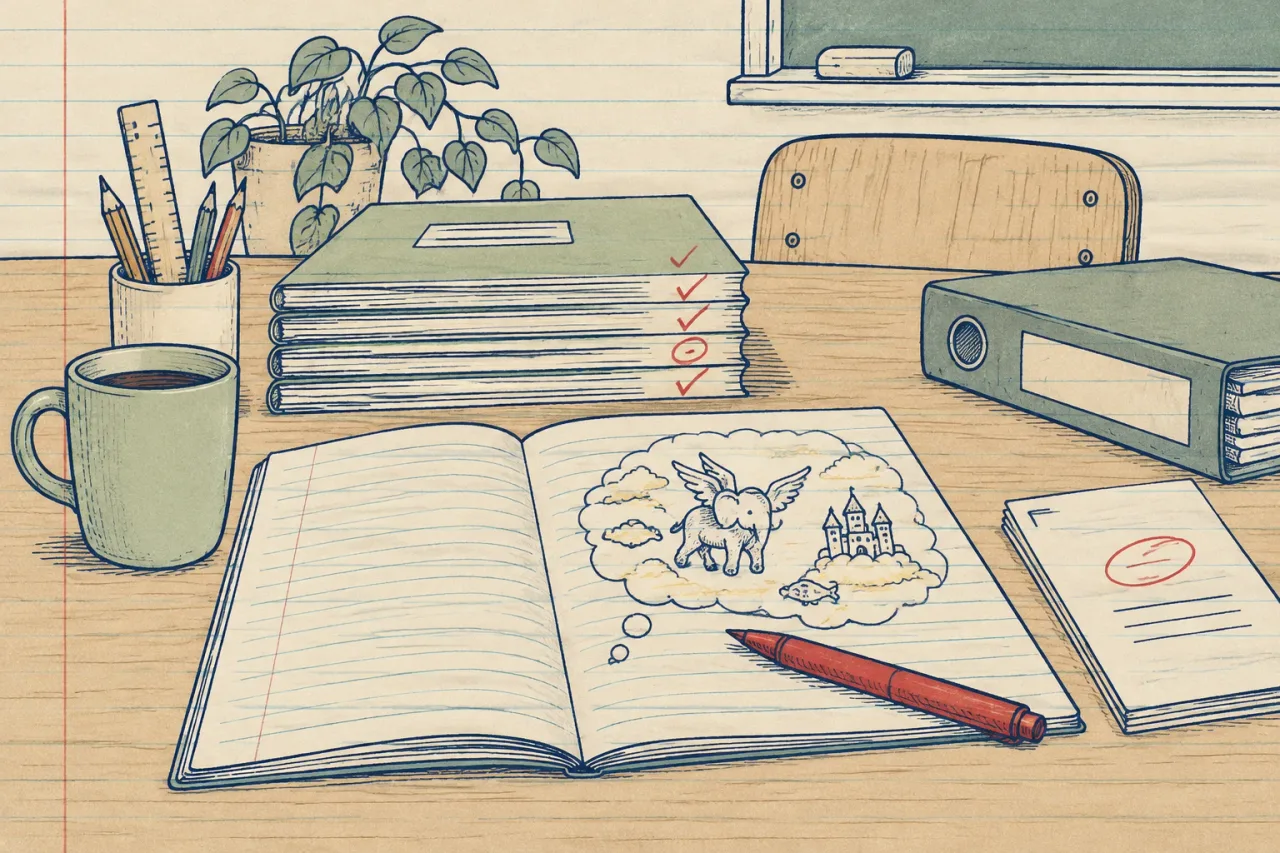
An AI hallucination is an answer that sounds right but is wrong or invented. The tool is not lying to you. It builds text that fits the pattern of a good answer, and sometimes nothing true sits behind that pattern. The tone stays smooth and sure either way, which is why mistakes are easy to miss.
What it looks like in daily life
Here are three examples a teacher might meet.
- A quiz on a poem quotes a line the poet never wrote.
- A history resource gives a date, a name or a source that does not exist, or mixes up two events.
- A worked maths example sets out tidy steps and then lands on the wrong answer.
The same can happen when a tool comments on pupils’ work. It may praise a point that is not in the writing, or miss an error that is. See use AI for marking and still make every mark yourself.
What tends to help
You cannot switch hallucinations off, so build a habit around them.
- Treat every output as a draft. You check it before it reaches pupils.
- Check names, dates, quotes, numbers and answers against a source you trust, such as your textbook or exam board material.
- Give the tool the material to work from. Paste in the text and ask it to use only that. The guide to lesson planning prompts that get a usable first draft shows how.
- Ask for smaller pieces. Ten quiz questions are quicker to check than a whole unit.
- Keep pupils’ names and personal data out of any AI tool unless your school has approved it. Follow your school’s AI and data policy.
A tool that builds on a fixed body of curriculum content may give you less to correct. You still read everything.
Where the term comes from
The word is borrowed from the human sense of seeing or hearing things that are not there. People working with AI began using it for confident false output. Some dislike it, because a tool does not perceive anything, and prefer plainer phrases such as “making things up”. You will see all of them.